V8Druid
do it as well as you can,but learn to do it better
seen a few like that before ....... planners should be parked in the middle of it all ... in concrete wellies, 'til it goes down ..... tossersOne close to me
View attachment 12178



seen a few like that before ....... planners should be parked in the middle of it all ... in concrete wellies, 'til it goes down ..... tossersOne close to me
View attachment 12178



I know that planning is getting harder and harder to get ... and this tiny island is running out of places to build on ..... but building on low lying, high risk sites, has got to stop ..... or .... levels MUST be raised/buildings must be stilted and infrastructure suitably mitigated

Totally agree Mr D.I know that planning is getting harder and harder to get ... and this tiny island is running out of places to build on ..... but building on low lying, high risk sites, has got to stop ..... or .... levels MUST be raised/buildings must be stilted and infrastructure suitably mitigated
this sort of weather and events are obviously going to be 'the norm' , going forward, BTLs and simply allowing this s**t to go on, year on year has got to come to an end .... the clear up costs, financially and emotionally are just waaaay too great and far out weigh dealing with mitigation in the first place
Wouldn't that be around 3% chance of flooding for every 100 years?so this area is known to have flooded twice in 75 years so by my calcs thats every 32.5 years it has flooded which equates to a 32% of flooding in 100 years.
The odds are too high for me to live there

I know that planning is getting harder and harder to get ... and this tiny island is running out of places to build on ..... but building on low lying, high risk sites, has got to stop ..... or .... levels MUST be raised/buildings must be stilted and infrastructure suitably mitigated
this sort of weather and events are obviously going to be 'the norm' , going forward, BTLs and simply allowing this s**t to go on, year on year has got to come to an end .... the clear up costs, financially and emotionally are just waaaay too great and far out weigh dealing with mitigation in the first place

I’m glad the planning is more thought out than it initially looks, but I would still rather not live on a flood plain.Having built a site on a flood plain, I can tell you there are quite a few regulations to jump through and things are quite carefully considered. Or at least they were with the developer I worked for. We built 14 houses in Chertsey - the year Chertsey was underwater and the army had to be called in. I know what we did worked because we were under 2ft of water at one time! The regulations around not building up ground artificially, stopping foul pipes from backing up into the house and allowing the free flow of flood water around the houses was all thought out and a necessity of the planning. Just so happens the one in 100 year flood event happened the year we were building it. So it is thought about when planning is granted on these higher risk land parcels, it just might not be enough.
I think what we are experiencing is beyond what those in the planning department/ environment agency foresaw and lessons will be learnt from this winter. The question is, how high do we build the defences because if this constant wet weather is to become a regular occurrence, there's no point building them to this years watermark - they almost need doubling. I know the EA are investing in improving flood defence as I've been asked to tender for some of the jobs. This was before this winters rain. So it is happening, just without the fanfare the papers expect.
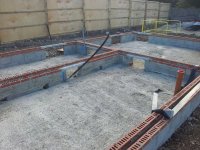
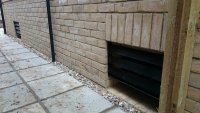
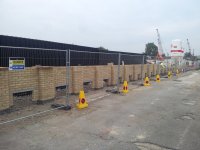
The pictures below show some of the details we had to incorporate into the build. The oversite had a 450mm void under the floor with "vents" to allow flood water to enter under the building and recede without causing any damage. The floors of the void were concreted and laid to falls to allow the water to flow out. Even the perimeter wall had vents in to allow water to flow through. It was all thought out.
Having built a site on a flood plain, I can tell you there are quite a few regulations to jump through and things are quite carefully considered. Or at least they were with the developer I worked for. We built 14 houses in Chertsey - the year Chertsey was underwater and the army had to be called in. I know what we did worked because we were under 2ft of water at one time! The regulations around not building up ground artificially, stopping foul pipes from backing up into the house and allowing the free flow of flood water around the houses was all thought out and a necessity of the planning. Just so happens the one in 100 year flood event happened the year we were building it. So it is thought about when planning is granted on these higher risk land parcels, it just might not be enough.
I think what we are experiencing is beyond what those in the planning department/ environment agency foresaw and lessons will be learnt from this winter. The question is, how high do we build the defences because if this constant wet weather is to become a regular occurrence, there's no point building them to this years watermark - they almost need doubling. I know the EA are investing in improving flood defence as I've been asked to tender for some of the jobs. This was before this winters rain. So it is happening, just without the fanfare the papers expect.
The pictures below show some of the details we had to incorporate into the build. The oversite had a 450mm void under the floor with "vents" to allow flood water to enter under the building and recede without causing any damage. The floors of the void were concreted and laid to falls to allow the water to flow out. Even the perimeter wall had vents in to allow water to flow through. It was all thought out.


Can't agree with this enough! Why build flood defences when they don't dredge the current water courses. Yes higher bankings may hold the current water level back but as the silt rises we are back to square one. The environment agency don't clear the ditches round us and we've set to ourselves. Already dropped our ditch levels a good couple of foot just clearing one stretch of main ditch leading to outflow. Madness!You will find conversation management and reserves rarely interfere with the main watercourses. Flood plains are over rated IMHO, get the channels flowing out to sea. As mentioned clear the main channels and get the water gone!
Same with the moorland crap.... I can see the advantages, no wait I can't when it comes to flooding.
Nice work, but thank you but no thank you!! As others are adding to this thread I looked at a house that sold in 2007 before the big flood for £400k....had the chance to buy it in 2010 for less than £100k....thank you but no thank you. The water has been through the windows twice in the last 3 months!! When the water level is down, I will take some photos of there latest flood defence....higher window culls!!Having built a site on a flood plain, I can tell you there are quite a few regulations to jump through and things are quite carefully considered. Or at least they were with the developer I worked for. We built 14 houses in Chertsey - the year Chertsey was underwater and the army had to be called in. I know what we did worked because we were under 2ft of water at one time! The regulations around not building up ground artificially, stopping foul pipes from backing up into the house and allowing the free flow of flood water around the houses was all thought out and a necessity of the planning. Just so happens the one in 100 year flood event happened the year we were building it. So it is thought about when planning is granted on these higher risk land parcels, it just might not be enough.
I think what we are experiencing is beyond what those in the planning department/ environment agency foresaw and lessons will be learnt from this winter. The question is, how high do we build the defences because if this constant wet weather is to become a regular occurrence, there's no point building them to this years watermark - they almost need doubling. I know the EA are investing in improving flood defence as I've been asked to tender for some of the jobs. This was before this winters rain. So it is happening, just without the fanfare the papers expect.
The pictures below show some of the details we had to incorporate into the build. The oversite had a 450mm void under the floor with "vents" to allow flood water to enter under the building and recede without causing any damage. The floors of the void were concreted and laid to falls to allow the water to flow out. Even the perimeter wall had vents in to allow water to flow through. It was all thought out.
I wouldn't mind if the house prices here reflected the fact that they flood but it barely makes much difference unfortunately. Can take a while to sell sometimes but get 2 or 3 years after a flood and usually sell. Pity those that buy them if they're unaware.Nice work, but thank you but no thank you!! As others are adding to this thread I looked at a house that sold in 2007 before the big flood for £400k....had the chance to buy it in 2010 for less than £100k....thank you but no thank you. The water has been through the windows twice in the last 3 months!! When the water level is down, I will take some photos of there latest flood defence....higher window culls!!