TB 1140 Slew Problems

T

Taat

Active member
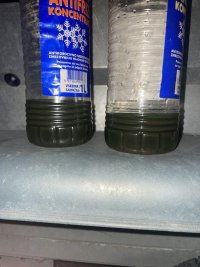
Right bottle cold oil, left bottle warm oil (not hot or on working temperature cause I couldn’t left it running for too long). Still very noticeable difference.
Both measured for 30 seconds and deadheaded the slew to the right on both.
Bottles are 1 litre, so I can say approximately 0.1l with cold oil and about 0.15-0.2l with warm oil. With hot oil it would probably be up to 0.3l. I will measure once again when I actually work with the machine for more than an hour.
Anyway this result is enough for me to say you are on the right track @Mick-the-fitter .
 

Attachments

  • IMG_3896.jpeg
    IMG_3896.jpeg
    188.9 KB · Views: 119
  • IMG_3899.jpeg
    IMG_3899.jpeg
    145.1 KB · Views: 115
M

Monkeybusiness

Well-known member
Right bottle cold oil, left bottle warm oil (not hot or on working temperature cause I couldn’t left it running for too long). Still very noticeable difference.
Both measured for 30 seconds and deadheaded the slew to the right on both.
Bottles are 1 litre, so I can say approximately 0.1l with cold oil and about 0.15-0.2l with warm oil. With hot oil it would probably be up to 0.3l. I will measure once again when I actually work with the machine for more than an hour.
Anyway this result is enough for me to say you are on the right track @Mick-the-fitter .
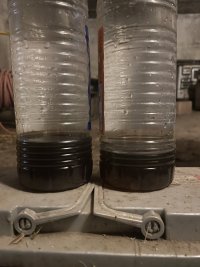
That hydraulic oil is a nasty colour!
 
Mick-the-fitter

Mick-the-fitter

It’s what I do!
Ok that makes sense and thank you for this explanation. I will do this test as soon as I can. I believe the results will be different. The bores on the cylinder block were conical when I measured them with the micrometer, but I did not think that would be enough of a leakage to cause drift so I just reused it. I will try to make a drawing for representation.
Only the middle part of the bores would be up to tolerance (0.025mm of difference), top and bottom parts are up to 0.075mm wider than the piston width.
The ovality will increase with use. Do the exercise, let me know the result😊
Right bottle cold oil, left bottle warm oil (not hot or on working temperature cause I couldn’t left it running for too long). Still very noticeable difference.
Both measured for 30 seconds and deadheaded the slew to the right on both.
Bottles are 1 litre, so I can say approximately 0.1l with cold oil and about 0.15-0.2l with warm oil. With hot oil it would probably be up to 0.3l. I will measure once again when I actually work with the machine for more than an hour.
Anyway this result is enough for me to say you are on the right track @Mick-the-fitter .
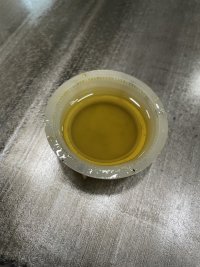
show me the oil you used to do the oil replacement with!
 
Mick-the-fitter

Mick-the-fitter

It’s what I do!
Can you also take a photo of the serial plate on the motor! I can get you tolerances for leak by!
 
T

Taat

Active member
The ovality will increase with use. Do the exercise, let me know the result😊

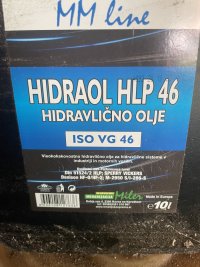
show me the oil you used to do the oil replacement with!
Sorry I had some work on our farm so I didn’t have time to respond.
This is the oil that I am topping up currently. The oil that I replaced with was different brand but the mark was the same ISO VG 46, which should be suitable for our climate and temperatures according to my operator manual.
 

Attachments

  • IMG_3920.jpeg
    IMG_3920.jpeg
    259 KB · Views: 93
  • IMG_3900.jpeg
    IMG_3900.jpeg
    222 KB · Views: 112
T

Taat

Active member
Ok no problem I see if I can get some specs for it, ie case drain leakage.
Thank you. Is there a way to get the exact dimensions of these hydraulic parts? The reason I am asking is beacuse I have replaced the cylinder block that was originally installed seemed to have the valve plate contact surface worn down, but according the overall length is still up to spec (86.2mm). This is according to the lenght specified on the box when I ordered a new one and found another aftermarket store online that says this is the correct dimension. But I am not sure about it.
The reason I am asking is that if I decide to tear down the motor again can I reuse the old cylinder block (I would have the contact surface ground down minimally and relapped). I have checked the piston bores and the tolerances are still tight and this old one doesn’t have bronze sleeves in the bores so I can expect for it to last longer than the new one (which had the bronze sleeved bores worn after less than a hunderd hours). The overall lenght of the cylinder block would be good in that case which is the only thing that matters right? As well as the bores which are still tight…
 
Mick-the-fitter

Mick-the-fitter

It’s what I do!
Thank you. Is there a way to get the exact dimensions of these hydraulic parts? The reason I am asking is beacuse I have replaced the cylinder block that was originally installed seemed to have the valve plate contact surface worn down, but according the overall length is still up to spec (86.2mm). This is according to the lenght specified on the box when I ordered a new one and found another aftermarket store online that says this is the correct dimension. But I am not sure about it.
The reason I am asking is that if I decide to tear down the motor again can I reuse the old cylinder block (I would have the contact surface ground down minimally and relapped). I have checked the piston bores and the tolerances are still tight and this old one doesn’t have bronze sleeves in the bores so I can expect for it to last longer than the new one (which had the bronze sleeved bores worn after less than a hunderd hours). The overall lenght of the cylinder block would be good in that case which is the only thing that matters right? As well as the bores which are still tight…
All the parts you have replaced have done little work hours they shouldn’t be worn that much already, we weren’t over keen on the oil colour in your samples!
 
T

Taat

Active member
All the parts you have replaced have done little work hours they shouldn’t be worn that much already, we weren’t over keen on the oil colour in your samples!
Yeah I know my oil is pretty problematic.
What would be the correct procedure to replace as much oil as possible at once?
My operator manual says the tank holds 95 litres and the whole system 215 litres.
If I recall correctly when I let the oil out from the tank it was about 110 litres that poured out. And i have replenished it with about 130 litres. So how to get the remaining 110 littes out of the system or are multiple oil changes at once necessary and running the actuators in between for a few minutes?
 
Mick-the-fitter

Mick-the-fitter

It’s what I do!
Unless all the rams, motors, valves and controls are removed or cleaned, then every time you change the tank oil you have changed 50% then it’s mixed with the existing, it’s never going to be back to 100% factory clean oil🤷‍♂️
 
T

Taat

Active member
Unless all the rams, motors, valves and controls are removed or cleaned, then every time you change the tank oil you have changed 50% then it’s mixed with the existing, it’s never going to be back to 100% factory clean oil🤷‍♂️
Okay so I am probably gonna leave the motor as it is for about a hundred hours. Also the oil. I have replaced more than 50% of it already. The colour is bad of course since I can’t get all the oil out and I believe it will stay that way by replacing only tank oil. Currently I have the machine on my girlfriends farm and every time I do some fixing or when I did the oil change my father in law is behind my back, because even if a drop of old oil falls on the ground it’s a huge waste 😂. He’s not a bad guy but I rather have peace when I do that sort work 😅.
Anyway I will do a major oil change by the end of the year or in the winter. That time I will take apart the slew motor again and the travel motors (if their leakage would be high, otherwise they work pretty good), because I also plan to put on the steel tracks so I will rebuild the undercarriage also. That way there will be more oil at loss. And in that case I will also try to remove the cylinders and somehow force the oil out of them. I will do all that at that time, because the cylinders will come off at the same time as the hoe attachment, since the king post has a lot of play and that needs to be fixed also. That way I will get lots of oil out, so maybe I will be able to replace about 80%.
 
T

Taat

Active member
Thanks for all the help up to now!
I just hope that I will manage… 😅
Just one more concern. If I get that much oil out of the system, how to fill it back up?
Filling the tank, run the pumps for a few moments while watching the oil level, then refill again? Can this cause any damage to pumps, motors and cylinder with so much oil drained out?
 
V8Druid

V8Druid

do it as well as you can,but learn to do it better
Okay so I am probably gonna leave the motor as it is for about a hundred hours. Also the oil. I have replaced more than 50% of it already. The colour is bad of course since I can’t get all the oil out and I believe it will stay that way by replacing only tank oil. Currently I have the machine on my girlfriends farm and every time I do some fixing or when I did the oil change my father in law is behind my back, because even if a drop of old oil falls on the ground it’s a huge waste 😂. He’s not a bad guy but I rather have peace when I do that sort work 😅.
Anyway I will do a major oil change by the end of the year or in the winter. That time I will take apart the slew motor again and the travel motors (if their leakage would be high, otherwise they work pretty good), because I also plan to put on the steel tracks so I will rebuild the undercarriage also. That way there will be more oil at loss. And in that case I will also try to remove the cylinders and somehow force the oil out of them. I will do all that at that time, because the cylinders will come off at the same time as the hoe attachment, since the king post has a lot of play and that needs to be fixed also. That way I will get lots of oil out, so maybe I will be able to replace about 80%.
air pressure into the closed side of the rams will displace the oil pretty rapidly ... need a line on the open port on the full side into a suitably large container and the ram properly restrained - the rod will either extend or close rapidly -- and the oil will come out at a rate of knots - have done it many times, purging mineral oil out of new att.s for my Bio oil running duck ;) .... fixed lines are your friends or it gets really messy, really quickly - trust me :LOL::LOL:
 
T

Taat

Active member
air pressure into the closed side of the rams will displace the oil pretty rapidly ... need a line on the open port on the full side into a suitably large container and the ram properly restrained - the rod will either extend or close rapidly -- and the oil will come out at a rate of knots - have done it many times, purging mineral oil out of new att.s for my Bio oil running duck ;) .... fixed lines are your friends or it gets really messy, really quickly - trust me :LOL::LOL:
Thank you, will keep that in mind!
 
M

Monkeybusiness

Well-known member
air pressure into the closed side of the rams will displace the oil pretty rapidly ... need a line on the open port on the full side into a suitably large container and the ram properly restrained - the rod will either extend or close rapidly -- and the oil will come out at a rate of knots - have done it many times, purging mineral oil out of new att.s for my Bio oil running duck ;) .... fixed lines are your friends or it gets really messy, really quickly - trust me :LOL::LOL:
I used an airline to open a closed ram once, not really giving much thought to the remaining contents and certainly not anticipating any speed or excitement!
The result was a fully extended ram and oil dripping from the roof of the shed…
 
D

Diggerdavey

Well-known member
I used an airline to open a closed ram once, not really giving much thought to the remaining contents and certainly not anticipating any speed or excitement!
The result was a fully extended ram and oil dripping from the roof of the shed…
Stories like this are great. You can imagine the scene of devastation and you’re prepared to share the sorry tale to save someone else. Fair play to you 😂
 
Top