TB 1140 Slew Problems

T

Taat

Active member
Sounds like the slew brake clutch pack is worn
Maybe, but still if I understand the operation correctly then the slew brake applies after a few seconds. And if I am on an incline and pulling dirt towards me the slew brake won’t even apply because there is constant pilot pressure since I am operating the hoe attachment. And there is this slight drift when operating which is probably because the oil isn’t under pressure in the slew motor, because I believe that the machine should hold position without slew brake engaged…
Also when I had the motor apart it didn’t seem like the friction disks would be worn. And the slew brake does hold nicely, it’s just when the oil is not at the right temperature it takes more than 10 seconds to engage. When the oil is hot it engages in about 5 seconds. In the video the oil was not at a working temperature that is why it took longer.
 
Last edited:
Mick-the-fitter

Mick-the-fitter

It’s what I do!
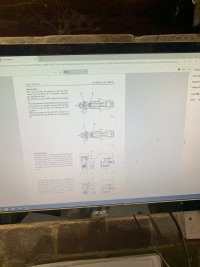
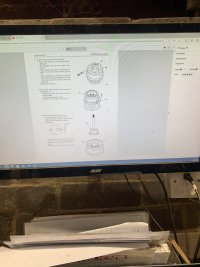
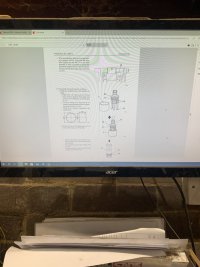
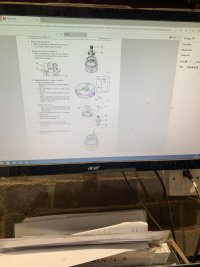
Can you just take out the brake valves for photo? Label Left and rght
 
Mick-the-fitter

Mick-the-fitter

It’s what I do!
You mean the relief valves of the slew motor right?
Yes, I’m send pictures for the right motor, the serial number was correct,
 

Attachments

  • IMG_2936.jpeg
    IMG_2936.jpeg
    150.6 KB · Views: 106
  • IMG_2937.jpeg
    IMG_2937.jpeg
    120.6 KB · Views: 93
  • IMG_2938.jpeg
    IMG_2938.jpeg
    152.8 KB · Views: 83
  • IMG_2939.jpeg
    IMG_2939.jpeg
    147.8 KB · Views: 83
  • IMG_2940.jpeg
    IMG_2940.jpeg
    136.1 KB · Views: 77
  • IMG_2948.jpeg
    IMG_2948.jpeg
    156.5 KB · Views: 87
  • IMG_2949.jpeg
    IMG_2949.jpeg
    153.3 KB · Views: 84
  • IMG_2947.jpeg
    IMG_2947.jpeg
    147.9 KB · Views: 86
  • IMG_2945.jpeg
    IMG_2945.jpeg
    133.9 KB · Views: 90
  • IMG_2946.jpeg
    IMG_2946.jpeg
    130.9 KB · Views: 83
  • IMG_2944.jpeg
    IMG_2944.jpeg
    146 KB · Views: 88
  • IMG_2941.jpeg
    IMG_2941.jpeg
    136.2 KB · Views: 73
  • IMG_2942.jpeg
    IMG_2942.jpeg
    130.7 KB · Views: 67
  • IMG_2943.jpeg
    IMG_2943.jpeg
    150.6 KB · Views: 113
T

Taat

Active member
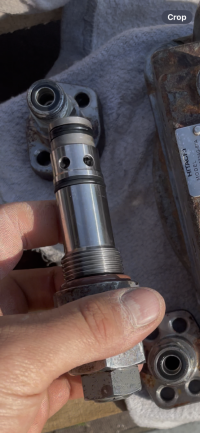
Not sure just checking orings and backing rings
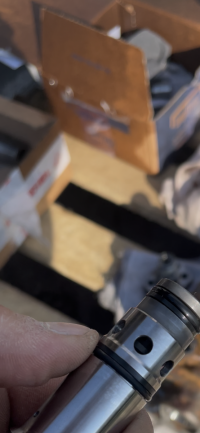
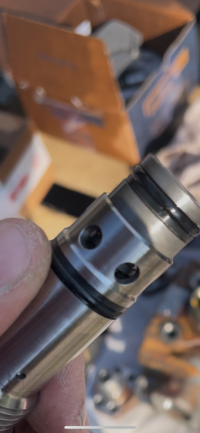
Hello. So I didn’t get to taking the relief valves out, but I have some screenshots from the video when I was recording the parts. The pictures ate just from one relief valve. Hope these will suffice.
 

Attachments

  • IMG_3880.png
    IMG_3880.png
    850.3 KB · Views: 88
  • IMG_3881.png
    IMG_3881.png
    634.5 KB · Views: 91
  • IMG_3882.png
    IMG_3882.png
    669.6 KB · Views: 102
Mick-the-fitter

Mick-the-fitter

It’s what I do!
Hello. So I didn’t get to taking the relief valves out, but I have some screenshots from the video when I was recording the parts. The pictures ate just from one relief valve. Hope these will suffice.
These are now the original seals were fitted?
 
Mick-the-fitter

Mick-the-fitter

It’s what I do!
They match what the moot or drawing says! I needed to check because if for some reason the o rings and backing rings were reversed they would cause leakage!
 
T

Taat

Active member
They match what the moot or drawing says! I needed to check because if for some reason the o rings and backing rings were reversed they would cause leakage!
Maybe I will take them out one day and replace them with the ones that were included in the seal kit that I have gotten later. Just in case if maybe the cylinder repair shop didn’t made them up to spec.
 
T

Taat

Active member
Another observation that I made when testing the leakage is that even when I don’t engage the slew function there is constant very thin drizzle of oil coming through the case drain. So to my thinking is that this oil is either coming from the makeup line through check valves (maybe I didn’t pay close enough attention to poppets and its seats), or through the main high pressure lines (that would indicate some kind of issue in the control valve…).
Or is that small drizzle of oil even though the slew controls aren’t touched normal? I don’t really know, but I think both could still create this slow drift. What do you think @Mick-the-fitter ?
 
Mick-the-fitter

Mick-the-fitter

It’s what I do!
Another observation that I made when testing the leakage is that even when I don’t engage the slew function there is constant very thin drizzle of oil coming through the case drain. So to my thinking is that this oil is either coming from the makeup line through check valves (maybe I didn’t pay close enough attention to poppets and its seats), or through the main high pressure lines (that would indicate some kind of issue in the control valve…).
Or is that small drizzle of oil even though the slew controls aren’t touched normal? I don’t really know, but I think both could still create this slow drift. What do you think @Mick-the-fitter ?
Wear is going to be the main factor here, how many hours had the machine done when you acquired it? And what regularity has there been in changing in hydraulic oil?
 
T

Taat

Active member
Wear is going to be the main factor here, how many hours had the machine done when you acquired it? And what regularity has there been in changing in hydraulic oil?
I got the machine last fall, it had about 12.200 hours, now it has about 12.500… I replaced about 120 litres of oil when I got it and its filters. No metal particles in old filters, but oil is pretty dark still as you can see in the videos I posted.
I don’t know how it was serviced prior to me but apart from this slew motor problem and a cracked valve plate in the main front pump the machine is in a pretty good shape.
 
Mick-the-fitter

Mick-the-fitter

It’s what I do!
I got the machine last fall, it had about 12.200 hours, now it has about 12.500… I replaced about 120 litres of oil when I got it and its filters. No metal particles in old filters, but oil is pretty dark still as you can see in the videos I posted.
I don’t know how it was serviced prior to me but apart from this slew motor problem and a cracked valve plate in the main front pump the machine is in a pretty good shape.
Ok so it could be down to the pistons and liner tolerances in the motor! Leakage into the case, you could check the leakage from the case when cold, hold the arm and bucket against something solid, the relief valves will dump for safety, run a hose out from the case drain to a clean drum, time the hold precisely(30 seconds) measure the oil amount,
Then do the same when up to running oil temp(hot) another clean drum and (30 seconds) measure the difference, the reliefs will open the same, and if the case amount is different the rotating parts will be the issue!
 
T

Taat

Active member
Ok so it could be down to the pistons and liner tolerances in the motor! Leakage into the case, you could check the leakage from the case when cold, hold the arm and bucket against something solid, the relief valves will dump for safety, run a hose out from the case drain to a clean drum, time the hold precisely(30 seconds) measure the oil amount,
Then do the same when up to running oil temp(hot) another clean drum and (30 seconds) measure the difference, the reliefs will open the same, and if the case amount is different the rotating parts will be the issue!
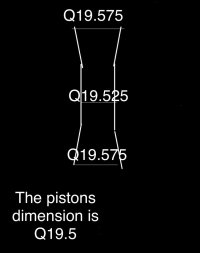
Ok that makes sense and thank you for this explanation. I will do this test as soon as I can. I believe the results will be different. The bores on the cylinder block were conical when I measured them with the micrometer, but I did not think that would be enough of a leakage to cause drift so I just reused it. I will try to make a drawing for representation.
Only the middle part of the bores would be up to tolerance (0.025mm of difference), top and bottom parts are up to 0.075mm wider than the piston width.
 

Attachments

  • IMG_3887.jpeg
    IMG_3887.jpeg
    56.2 KB · Views: 92
Top