

Engcon UK
The Noble Art of Digging
We had a call about this today (again......) and while it was covered in the old CEF, hopefully no-one will mind me reposting it for new readers.
One of the FAQ's we get is 'can I use my own buckets with a tilty'? The answer is 'you can, but it would be better if you didn't'. There are several reasons for this:
Firstly, unless your buckets have 'S-type' brackets on top, they won't fit a standard tilty hitch. Before Engcon and the other major tilty manufacturers set up their own operations in the UK, they were represented by dealers who, in many cases, took the line of least resistance and sold a tilty with a pin grab type hitch, rather than explain the benefits of the S-type system. With an S-type hitch, the build height is around half that of a conventional hitch, which means that you don't lose break-out force because the bucket is much closer to the axis of rotation. See below (the S-type is on the right, BTW)
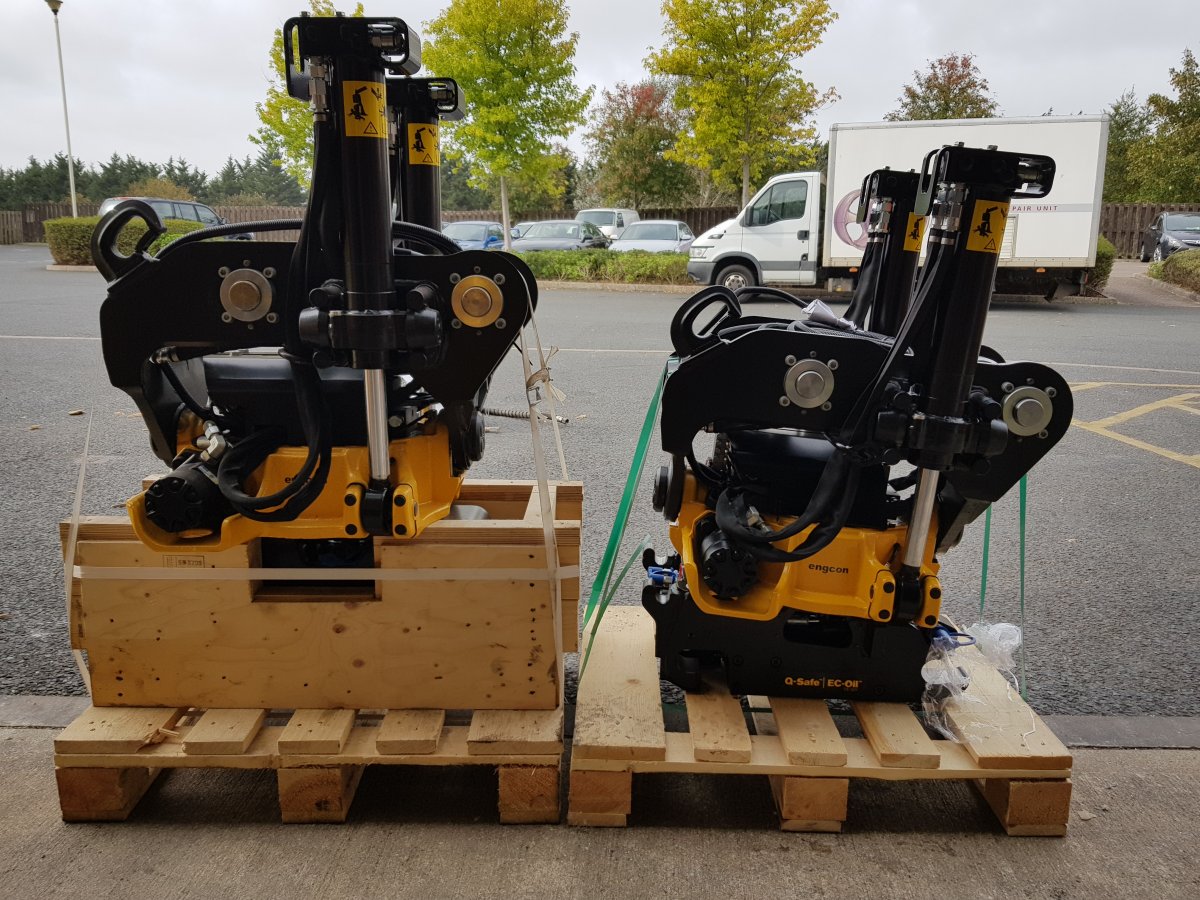
The other thing about an S-type arrangement is that the brackets on the attachments or buckets wrap around the hitch and distribute the digging forces into the body of the hitch. With conventional digging, the digging forces are always in line with the centre of the slew ring and the bucket axle and the corresponding hitch jaw closest to the cab is taking most of the strain. With a tilty, you are digging offset, at an angle, away from you; in fact in any direction and the digging forces follow suit. It's like reversing a bucket and using it as a face shovel - the forces are then on the hitch ram and it will wear as a result. An S-type hitch overcomes this and it's why you shouldn't compromise your investment in a tilty by going for a pin grab (or PUP) hitch rather than the real deal. If you really want to use your buckets, then buy some S-type brackets from the tilty manufacturer and get your buckets converted.
Scandi buckets also need some explanation: The shape is different to a UK bucket (I'm not talking just about the grading bucket, which deserves an explanation all to itself, but the whole range). The buckets tend to have cutaway sides and a deep back. The philosophy here is that by cutting away the sides, you have less resistance cutting into the unbroken ground and, by the time the soil hits the sides it's broken up and there is less drag. Hygge
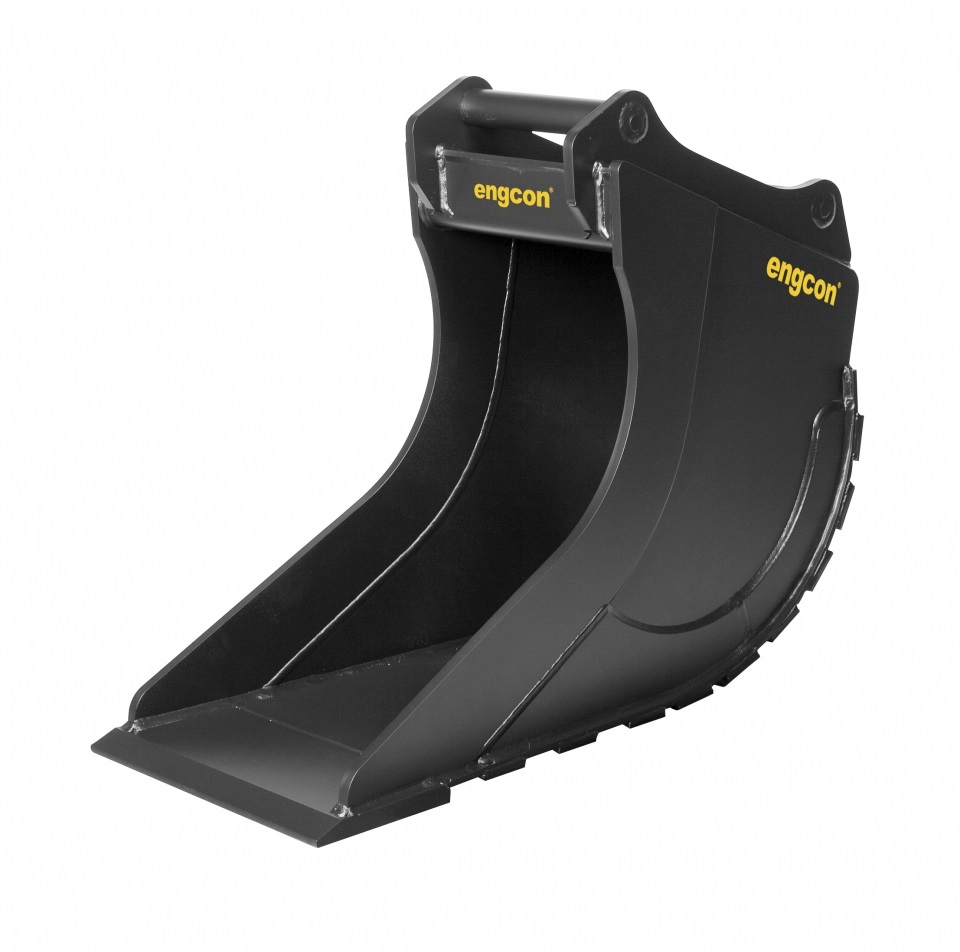
Then there is the grading bucket
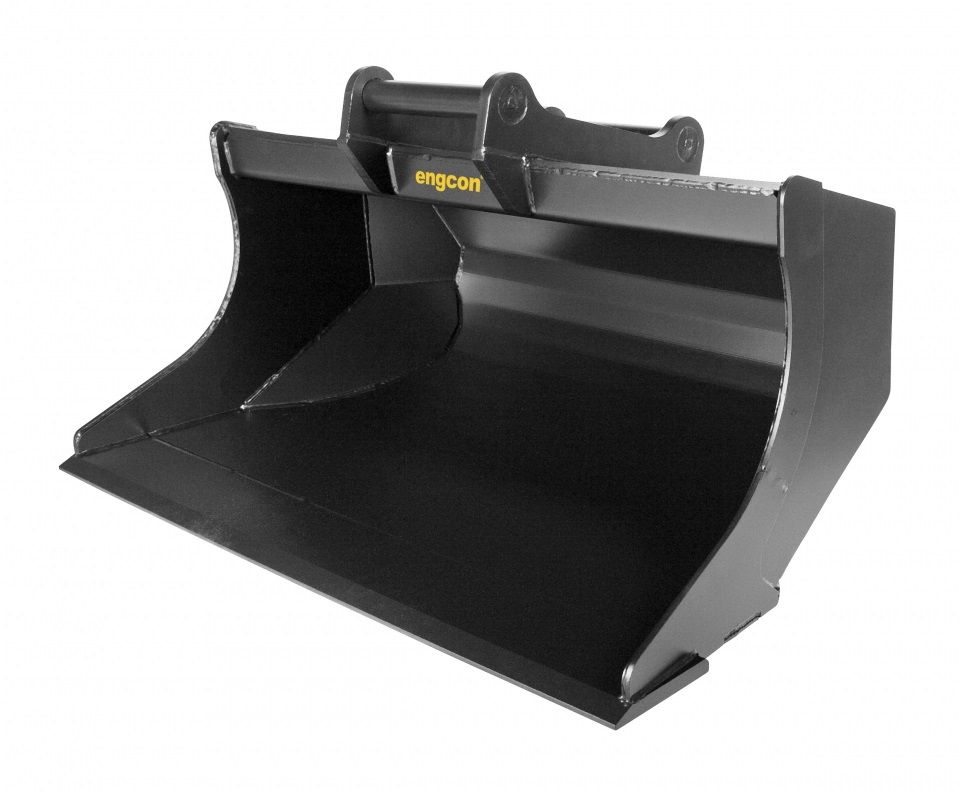
Chamfered corners from the bottom up to the ceiling to avoid “colliding” with house walls and other objects that can potentially be damaged by the rotating bucket. Conical form for easier filling and an adapted angle of 16 degrees between mounting and bottom to more easily rotate the bucket without losing the material being moved. Don't buy a tilty without one.
HTH
One of the FAQ's we get is 'can I use my own buckets with a tilty'? The answer is 'you can, but it would be better if you didn't'. There are several reasons for this:
Firstly, unless your buckets have 'S-type' brackets on top, they won't fit a standard tilty hitch. Before Engcon and the other major tilty manufacturers set up their own operations in the UK, they were represented by dealers who, in many cases, took the line of least resistance and sold a tilty with a pin grab type hitch, rather than explain the benefits of the S-type system. With an S-type hitch, the build height is around half that of a conventional hitch, which means that you don't lose break-out force because the bucket is much closer to the axis of rotation. See below (the S-type is on the right, BTW)
The other thing about an S-type arrangement is that the brackets on the attachments or buckets wrap around the hitch and distribute the digging forces into the body of the hitch. With conventional digging, the digging forces are always in line with the centre of the slew ring and the bucket axle and the corresponding hitch jaw closest to the cab is taking most of the strain. With a tilty, you are digging offset, at an angle, away from you; in fact in any direction and the digging forces follow suit. It's like reversing a bucket and using it as a face shovel - the forces are then on the hitch ram and it will wear as a result. An S-type hitch overcomes this and it's why you shouldn't compromise your investment in a tilty by going for a pin grab (or PUP) hitch rather than the real deal. If you really want to use your buckets, then buy some S-type brackets from the tilty manufacturer and get your buckets converted.
Scandi buckets also need some explanation: The shape is different to a UK bucket (I'm not talking just about the grading bucket, which deserves an explanation all to itself, but the whole range). The buckets tend to have cutaway sides and a deep back. The philosophy here is that by cutting away the sides, you have less resistance cutting into the unbroken ground and, by the time the soil hits the sides it's broken up and there is less drag. Hygge
Then there is the grading bucket
Chamfered corners from the bottom up to the ceiling to avoid “colliding” with house walls and other objects that can potentially be damaged by the rotating bucket. Conical form for easier filling and an adapted angle of 16 degrees between mounting and bottom to more easily rotate the bucket without losing the material being moved. Don't buy a tilty without one.
HTH


