She's arrived this morning.....

V8Druid

V8Druid

do it as well as you can,but learn to do it better
But even a perfectly loaded tandem or tri axle trailer will have a lot more than nose weight on the jockey wheel just to be able to get it off the hitch.
I agree James, but the lift required is not a great deal, if it is loaded correctly and would be within the design of the jockey ... but they aren't designed to stand half tonne loads, which is what they end up with a lot of the time :rolleyes:
 
V8Druid

V8Druid

do it as well as you can,but learn to do it better
A perfectly loaded trailer shouldn't exceed the towball weight quoted by either the trailer manufacturer (probably won't be able to find that one) or the vehicle/towbar maker. It'll probably only be between 100 and 150kg so not a huge ask for a jockey wheel but yes they are crap in many cases.
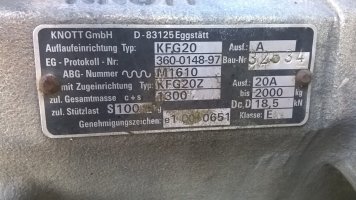
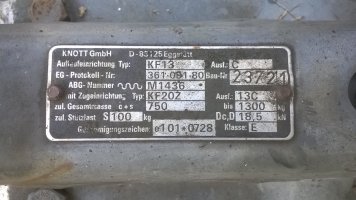
should be on a plate on the coupling Gaz (stutzlast) ;)

WP_20210918_11_42_10_Pro.jpg WP_20210918_11_41_56_Pro.jpg
and yes a lot of jockey wheels're crap
 
M

Monkeybusiness

Well-known member
I agree James, but the lift required is not a great deal, if it is loaded correctly and would be within the design of the jockey ... but they aren't designed to stand half tonne loads, which is what they end up with a lot of the time :rolleyes:
What shovelhands is getting at is the jockey wheel loading can essentially be more than the hitch nose-weigh as you often need to take the weight carried by the front axle to get it off the tow ball.
 
GazCro

GazCro

Well-known member
What shovelhands is getting at is the jockey wheel loading can essentially be more than the hitch nose-weigh as you often need to take the weight carried by the front axle to get it off the tow ball.
Your tow ball height is wrong then or too much weight on the ball and suspension is on its arse on vehicle
 
Shovelhands

Shovelhands

Well-known member
I agree, but….once you’ve transferred the load to the jockey wheel and increase the height to uncouple the hitch, you’ve effectively taken the weight off the front axle and transferred some of load that was on the front axle to jockey wheel. I think if you had the jockey wheel on a scale the numbers would increase rapidly as you wound the jockey down.
 
V8Druid

V8Druid

do it as well as you can,but learn to do it better
Your on my wavelength….👍
What shovelhands is getting at is the jockey wheel loading can essentially be more than the hitch nose-weigh as you often need to take the weight carried by the front axle to get it off the tow ball.
agreed ...

I agree, but….once you’ve transferred the load to the jockey wheel and increase the height to uncouple the hitch, you’ve effectively taken the weight off the front axle and transferred some of load that was on the front axle to jockey wheel. I think if you had the jockey wheel on a scale the numbers would increase rapidly as you wound the jockey down.
also agreed, but it shouldn't take more than a few inches of lift to clear the hitch if it's correctly weighted
 
S

Smiffy

Well-known member
agreed ...


also agreed, but it shouldn't take more than a few inches of lift to clear the hitch if it's correctly weighted

Depends on how soft the tow vehicle springs are.
Also you can set the hitch height do everything properly but you unload the tow vehicle first and muck everything up
 
M

Monkeybusiness

Well-known member
We run 3.5 tonne tippers with arb bodies (high sided ‘gypsy wagons’, but old and not shiny…) with uprated springs as they are more often than not running fully loaded.
They usually tow 2 tonne tracked chippers on plant trailers, which are relatively nose-heavy when loaded (I’ve not actually measured the nose weight, but they tow fine on the various vans as well as pickups and Land Rovers, so they aren’t miles out weight-wise).
The nature of what we do means that the hitch height can change several times during a working day, so we don’t bother with adjustable hitches. When the vans are empty the nose weight is arguably too heavy, but we have never had any issues over tens of thousands of miles.
The Ifor Williams GH plant trailers have been consistently the strongest we have used, and the standard ribbed jockey wheel setup fairs well (unless dragged down the road…).
The Brian James trailer sadly didn’t stand up to the way we use them, but it might be that we are too rough (and need kit designed to survive Welsh hill farmer’s demands!).

 
Mogman

Mogman

What man as done, man can do, what never has,maybe
There is a company on Facebook advertising hydraulic jockey stands rather than wheels with a bottle jack to lower rather than screw thread
I made one years ago got a cab tilt ram of a truck complete with pump and pipes welded a set of brackets on the end of the rod to except a small wheel and carefully welded a mounting plate on the side of the ram body worked really well as the rod would just rotate with the wheel as you moved the trailer
 
R

Russell

Well-known member
The yanks have electric ones. I did have a look for a electric jocky wheel Jack but couldn't find one over here.
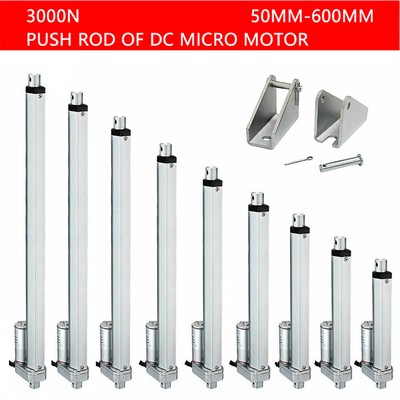
I was thinking about fitting a 12v linear actuator bolted within the A frame but have yet to do anything about it.
I think this would do 300kg
 
Last edited:
V8Druid

V8Druid

do it as well as you can,but learn to do it better
The yanks have electric ones. I did have a look for a electric jocky wheel Jack but couldn't find one over here.
I was thinking about fitting a 12v linear actuator bolted within the A frame but have yet to do anything about it.
I think this would do 300kg
1Kn = 102kgs Russel ..... so yeh, 306kgs (y)
 
V8Druid

V8Druid

do it as well as you can,but learn to do it better
My googling reminded me from collage days , KG=newton/9.81
so
1000n/9.81= 101.9kg so 102kg (y)

so it wasn't a complete waste of time and money, or was it?
it's one of those equivalents/conversions that's branded into my grey matter ...
beam/section loading tables are all in Kn,s, so was a figure I used daily in calc.s on jobs. ..
much like 2204lbs = 1000kgs/2.204lbs per kilo or 25.4mm per inch ..etc., etc.

I grew up with old school imperial measures, not metric, although I used both daily and could convert mentally with dexterity, I always found it 'easier' to 'visualise', in my mind's eye, in imperial, better than I could with metric ... and then convert :LOL:
conversely, metric volume is much easier .. 1M3 =220 gal.s or 4.55L=1 gallon ... visualising litre-age is way easier - 's all tens ;):giggle:(y)
 
R

Russell

Well-known member
weirdly I find myself guessing measurements in imperial but working in metric. We were never thought imperial at school so i get a bit lost with fractions of a inch or thou of inch
 
diggerjones

diggerjones

Well-known member
weirdly I find myself guessing measurements in imperial but working in metric. We were never thought imperial at school so i get a bit lost with fractions of a inch or thou of inch
I'm the same. Born in 69. On another note my 11 year old daughter said her mate was 5' 2". 😁
 
Top