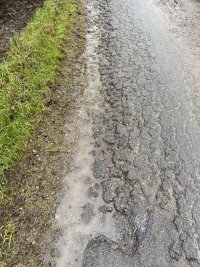
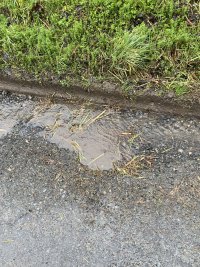
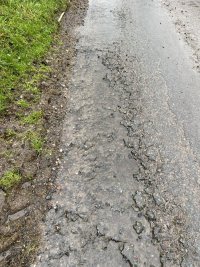
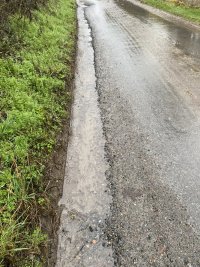
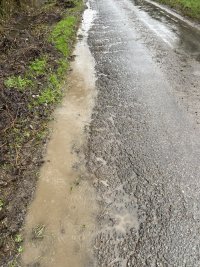
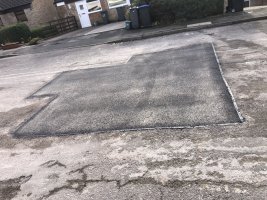
I’m not talking resurfacing the M1 here, I’m talking about a minor repair. The most basic job that some of my local council and its subbies don’t seem to be able to do. They have a full hotbox in tow, with all the necessary kit to do a decent job, yet are basically just throwing a shovel full in and running the wacker over twice. I bet there’s more dropped in the local lay-bys before knock of than what’s been laid all day!
It doesn't matter what kit they have got. If the surrounding road plus sub base, base and binder is knackered which is usually they case it won't last. If they area has a massive dip that holds water, repairing a pothole is futile.
Some other info for you.
The k140 tac coat that is applied requires 2hrs to crack before it should be laid on for optimum results. Noone would be very impressed seeing the pothole gang sit around for 2 hrs waiting for this.
Tarmac doesn't last well in hot boxes. They are great to allow you to manage time between collection and laying for time critical work. For potholes they aren't great. The material doesn't get agitated enough. And it's in there to long. Especially when you consider that a lot of council yards have big static hotboxes that you can reverse a wagon into. These get filled with 40t of tarmac on Monday morning and loaded out into mobile hotboxes with a telehandler every morning.
It saves money on the bulk buy of material and saves time for the gang each day. Unfortunately it does no favours to the material.
The next problem is that a lot of the work is still done with ac10 as it takes a lot of skill and is quite difficult to lay an sma or PMB 10 in a pothole.
The material used for hand lay is either 90 or 120 pen. This is the penetration value once cooled. Machine lay is 30 pen.
So generally the material used for potholes is pretty rubbish it's a weak grade of a poor performance material that is past it's sell by date.
It is very difficult to get a nice consistent base to do a pothole repair by hand. A planer is far superior for prep work.
Once the patch is laid, best practice is to use over banding to seal the joints. This has been banned by the majority of councils as it is slippery and to many cyclists and motorbikers sued them.
For really good long lasting repairs, it is far superior to send a small planer in. Followed by a sweeper. To take out a patch a meter wide. Then use a mini paver to relay.
And then over band. Preferably take 150mm deep and put 100mm of new binder back in. Then plane out an area slightly so that the binder joint and wearing course joint are offset by atleast 300mm.
This is how we do distribution centres with high hgv traffic.
We also use poly modified bitumen in the wearing course and heavy duty macadam or an eme2 product for the binder.
It's expensive but gives a really high quality repair.