O
oldchips
Member
Finally tried to repair my JS150 track gearbox after 6 months of hospitals and then 2.1/2 years of Covid.
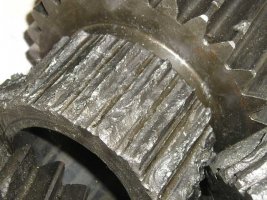
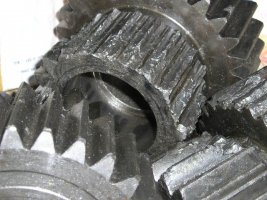
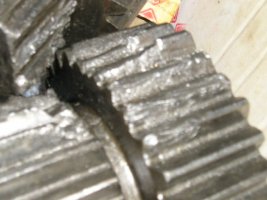
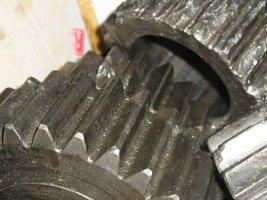
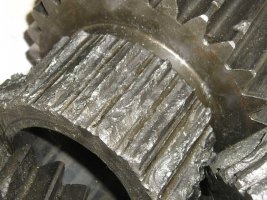
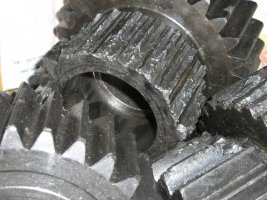
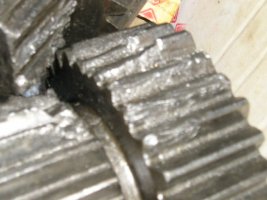
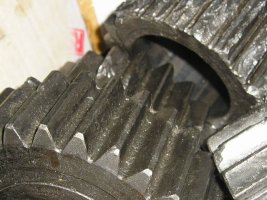
Look at the photos for the state of the reduction gears, and the central roller bearings weren't any better. Strangely the outer ring gears were chewed but not terminally so.
Why in this state? The machine was a scrap handler, and my thoughts are that it was never tracked, so no oil spread on the gears and bearings, so years of dry movement slowly scraped the gears into steel dust. The inside of the gearbox was covered in little pieces of steel and dust, the oil had been long overheated and ruined. When I bought the machine the oil was black and stank to high heaven, obviously changed, but just as bad in only a few 10's of hours of use, much of it moving. So, when buying a machine undo the various level plugs and if the smell doesn't hit you, get a length of wire to poke inside and look at the oil. If it stinks, or none, then go and find another machine to buy!
I bought just the three dual gears, cost about £900. For £1400 I could have had a complete gearbox but in the end decided I couldn't cope with the weight of the gearbox, plus the problem of splitting the track. It was a sensible decision but now regret it.
The problem was that machining up some new phosphor bronze bushes to replace the roller bearings was easy, it was the weight of the complete unit plus the setting of the gears in the correct position that proved impossible. As you would expect the three gears need to fit into the two ring gears, and with different sizes of all gears then there might be only one possible way they would fit. The gears are marked with two marks either side of one tooth. The central drive gear was also marked with three marks, but these were on the inside of the gear, not visible when trying to assemble. I didn't have the manual to hand so had to guess, wrongly, how the three gears were aligned. Being wrong didn't really stop the fitting of the planet carrier into the hub, the shear weight of it effectively did that. The manual shows the assembly process with the hub off the machine, with the opening upwards, and a crane lowing the carrier into the hub. None of these were possible stuck out in a wood. Future attempts will need a circular clamp around the carrier with some lifting gear to lower it into the hub.
The next problem is that with the new gears and bearings, there isn't any real clearance between gear teeth to slide the carrier into the ring gears. Not like when it was dismantled when the wear meant there was inches of clearance!
The moral of the story is that even something as tough as a digger can be easily wrecked, know how to check before purchase! The machine is good, no leaks, pins tight, engine runs fine, changed various oils, tracks and sprockets loads of life, slew ring tight, just needs two powered tracks to move around.
Look at the photos for the state of the reduction gears, and the central roller bearings weren't any better. Strangely the outer ring gears were chewed but not terminally so.
Why in this state? The machine was a scrap handler, and my thoughts are that it was never tracked, so no oil spread on the gears and bearings, so years of dry movement slowly scraped the gears into steel dust. The inside of the gearbox was covered in little pieces of steel and dust, the oil had been long overheated and ruined. When I bought the machine the oil was black and stank to high heaven, obviously changed, but just as bad in only a few 10's of hours of use, much of it moving. So, when buying a machine undo the various level plugs and if the smell doesn't hit you, get a length of wire to poke inside and look at the oil. If it stinks, or none, then go and find another machine to buy!
I bought just the three dual gears, cost about £900. For £1400 I could have had a complete gearbox but in the end decided I couldn't cope with the weight of the gearbox, plus the problem of splitting the track. It was a sensible decision but now regret it.
The problem was that machining up some new phosphor bronze bushes to replace the roller bearings was easy, it was the weight of the complete unit plus the setting of the gears in the correct position that proved impossible. As you would expect the three gears need to fit into the two ring gears, and with different sizes of all gears then there might be only one possible way they would fit. The gears are marked with two marks either side of one tooth. The central drive gear was also marked with three marks, but these were on the inside of the gear, not visible when trying to assemble. I didn't have the manual to hand so had to guess, wrongly, how the three gears were aligned. Being wrong didn't really stop the fitting of the planet carrier into the hub, the shear weight of it effectively did that. The manual shows the assembly process with the hub off the machine, with the opening upwards, and a crane lowing the carrier into the hub. None of these were possible stuck out in a wood. Future attempts will need a circular clamp around the carrier with some lifting gear to lower it into the hub.
The next problem is that with the new gears and bearings, there isn't any real clearance between gear teeth to slide the carrier into the ring gears. Not like when it was dismantled when the wear meant there was inches of clearance!
The moral of the story is that even something as tough as a digger can be easily wrecked, know how to check before purchase! The machine is good, no leaks, pins tight, engine runs fine, changed various oils, tracks and sprockets loads of life, slew ring tight, just needs two powered tracks to move around.