Advice needed from the resident heating boys

Vinpetrol

Vinpetrol

Well-known member
Hi Gents . I’m installing a ground source heat pump at my new build .
The heating engineer is a reputable guy I’ve worked with before .
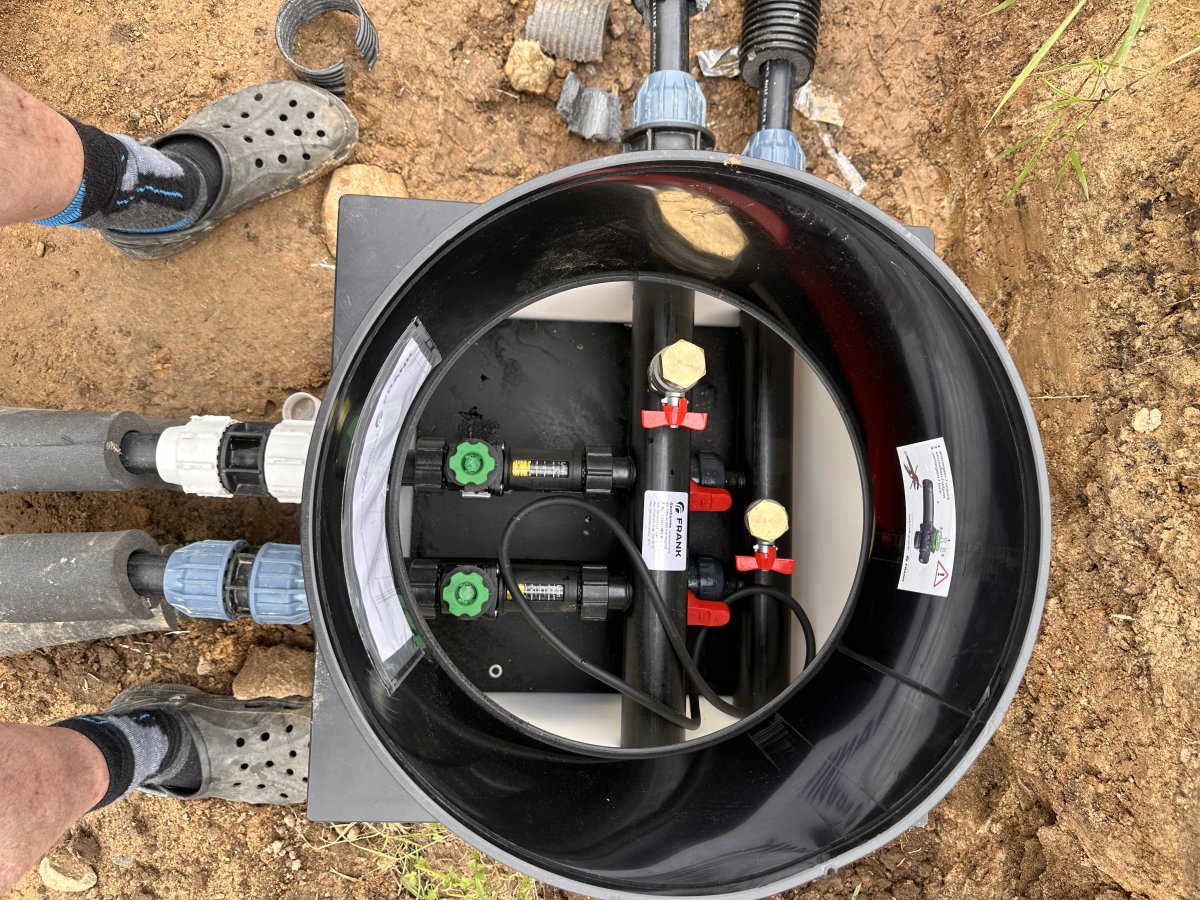
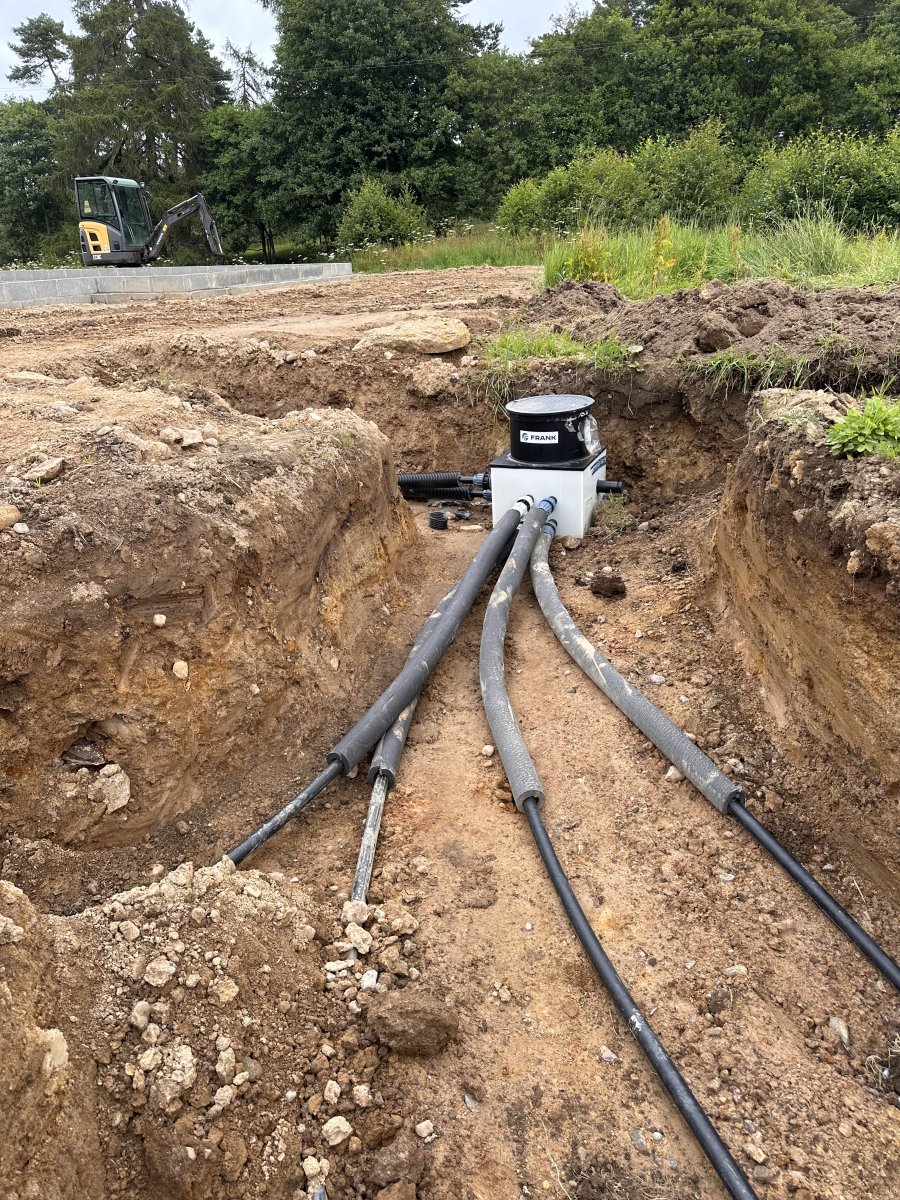
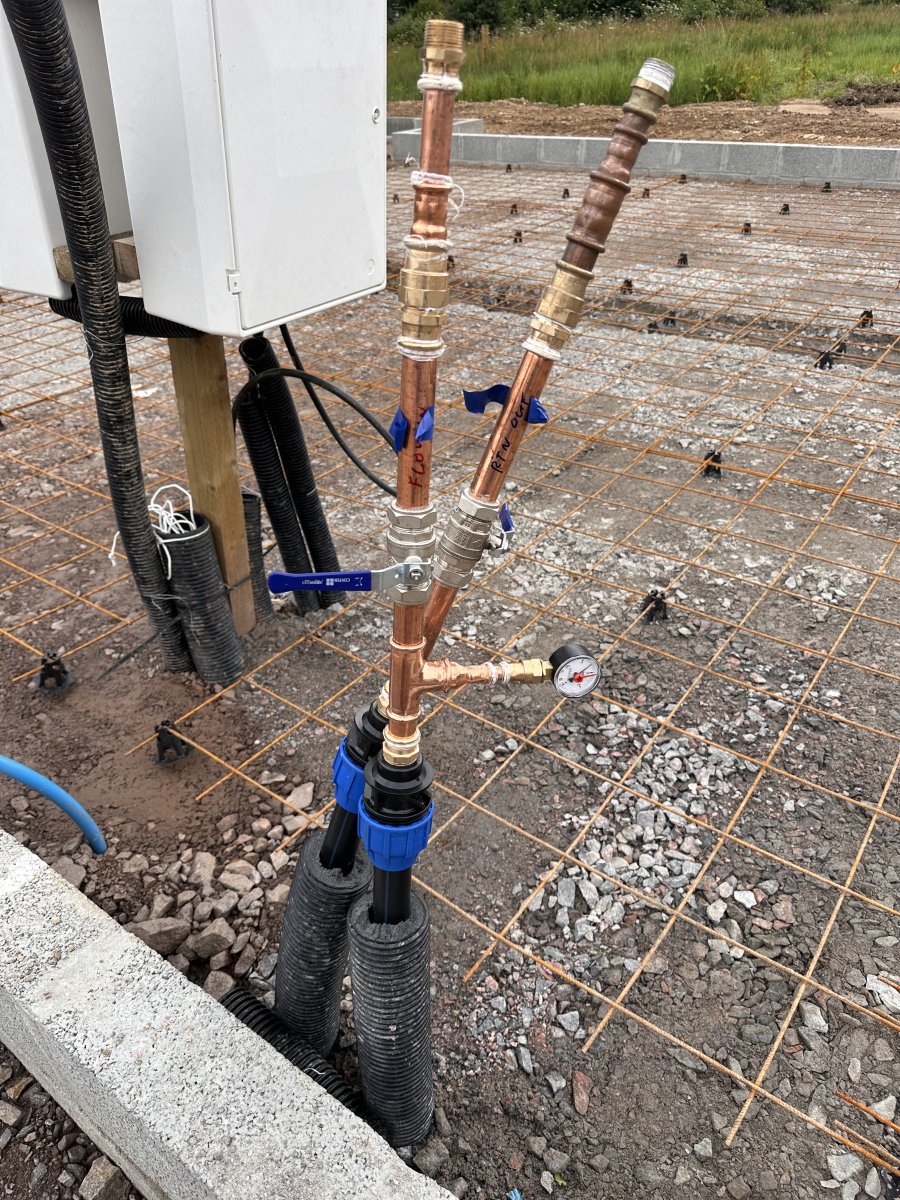
I installed 2 ground loop collectors 300m long each one. They run into an underground manifold then pass through an insulated flow and return into the house .
The ground runs up hill away from the house so I installed a tee piece in each loop at the highest point and put an air bleeder at this point .
I’ve left the joints open so I can see if I have any leaks before I back fill . All the fittings are compression .
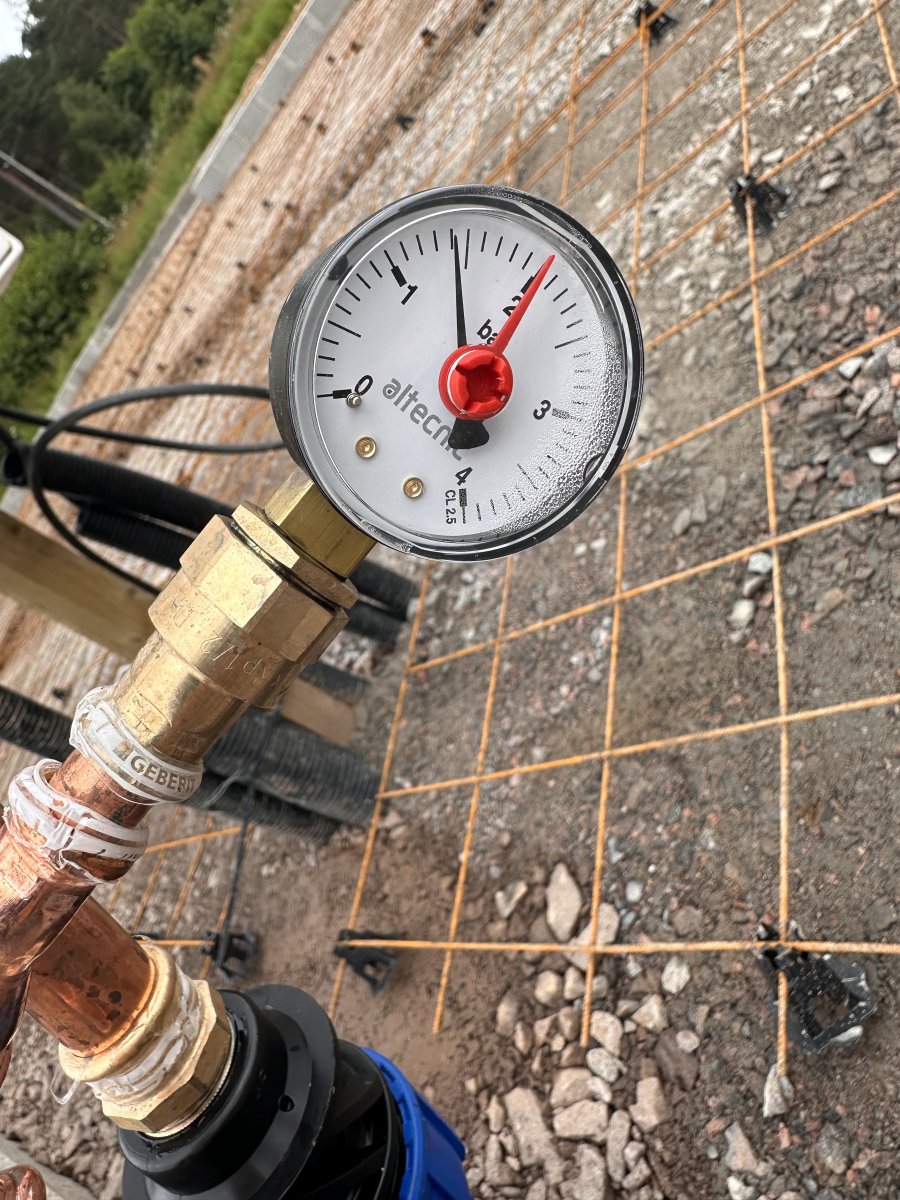
The heating engineer was out yesterday and used a pump to fill the system with water . I asked him to install a pressure gauge in line so I can see if we have any pressure drop. He says he doesn’t normally do this . He normally just checks all the joints once it pressurised for leaks .
When we finished yesterday we shut of the valve that was pumping into the loop and the valve on the return back . The pressure gauge bounced wildly for a while and settled just above 2 bar . Over 24 hours it has dropped very slowly to 1.4 bar . I’ve checked all the joints and can’t see any signs of leaks . Everything looks bone dry .
What I’d like to know is what do you guys do when installing ground loops to check pressure ?
Could my 4 bar gauge be an unreliable method to do it with nearly 600m of water filled pipe .

Any advice very appreciated !
IMG_6563.jpeg
IMG_6562.jpeg
IMG_6561.jpeg
IMG_6560.jpeg
 
Last edited:
Vinpetrol

Vinpetrol

Well-known member
We put it under all slabs aswell. Gives a more consistent curing time Across the slab and stops either water in the subbase slowing curing or the subbase drawing water out the slab and curing to quickly
We do that as well when it’s occasionally specified by the architect but not as a rule . Structural slab going off to fast is never usually an issue up here . We don’t power float structural slab either . Just tamp it and run big blue float over it . Strong conc though C35 125mm thick
 
B

bobthebuilder

Well-known member
bit of air in the pipes,top it up again ,i have had systems where we thought there was a leak but after a couple of days it stayed at a consistant pressure
 
S

Smiffy

Well-known member
We do that as well when it’s occasionally specified by the architect but not as a rule . Structural slab going off to fast is never usually an issue up here . We don’t power float structural slab either . Just tamp it and run big blue float over it . Strong conc though C35 125mm thick

We don't powerfloat structural slabs. Have just run roller tamp over before and left at that. But we have had problems with delayed lorries causing cold joints if poured straight on type 1.
Also if doing blocks it can muck things up
 
V8Druid

V8Druid

do it as well as you can,but learn to do it better
bit of air in the pipes,top it up again ,i have had systems where we thought there was a leak but after a couple of days it stayed at a consistant pressure
was my first thought - trapped air percolating about ... must be a lot of opportunity for pockets if it's been laid coiled
 
Vinpetrol

Vinpetrol

Well-known member
was my first thought - trapped air percolating about ... must be a lot of opportunity for pockets if it's been laid coiled
It’s not a slinky , I dug 2 straight trenches and unwound the coil of pipe . There could be more air in it though . I put the air valves in each loop at the highest point but there are still high and low points lower down in the loop . Also the air valves have a hand valve below them . The installer wanted these as he’s had problems with the air valves failing so he likes to know he can shut them off . They are shut off at the moment so no air is passing out of them just now .
 
Vinpetrol

Vinpetrol

Well-known member
Sadly I don’t get involved with gshp’s, but I’d say it’s air in the pipework that’s making you think there is pressure loss
So air that can’t escape if it’s moving about can look like pressure loss ? That is good news if that’s the case
 
S

Stroppymonkey

Well-known member
Perhaps @Stroppymonkey might be able to help with your pressure woes. And I'm sure someone will be along shortly to pick you up on your crocs and socks combo, they won't be able to help themselves.

Sorry late to the party. Down at a running festival with the wife and whilst beautiful it’s tucked down the back of the clay pits near Plympton and signal is sketchy.
Right …. GSHP. Hopefully OP has had this designed by someone for heat loss? I’ve always had it designed as a package to cover my ass, but don’t do a lot of GSHP these days so may we out of touch. Looks well done though. Air vents correct solution to the high loops.
The way to test this is to fill and vent, ideally by circulating with a big commissioning pump. When testing plastic pipe (especially if not buried) then you need to follow a certain test procedure as the plastic will stretch. Any air will affect results and also black pipe out in the sun will warm up which will also affect results.
Best practice is to do all this before sanding it in and back fill :)
 
Vinpetrol

Vinpetrol

Well-known member
Sorry late to the party. Down at a running festival with the wife and whilst beautiful it’s tucked down the back of the clay pits near Plympton and signal is sketchy.
Right …. GSHP. Hopefully OP has had this designed by someone for heat loss? I’ve always had it designed as a package to cover my ass, but don’t do a lot of GSHP these days so may we out of touch. Looks well done though. Air vents correct solution to the high loops.
The way to test this is to fill and vent, ideally by circulating with a big commissioning pump. When testing plastic pipe (especially if not buried) then you need to follow a certain test procedure as the plastic will stretch. Any air will affect results and also black pipe out in the sun will warm up which will also affect results.
Best practice is to do all this before sanding it in and back fill :)
Thanks for reply , yes he is a reputable heat pump guy. He has taken the sap calcs and house plans to work out the heat loss . It needs a 13kw pump . I’ve done a few installs over the years and he’s the most reputable . I’m fortunate that he lives just around the corner now as well ! I’ve left all the joints exposed but didn’t have the luxury of leaving the pipe exposed . I had to do one loop at a time and some of the trenches were so wet I needed to backfill (carefully) at the time before the trench fell in . I’m very confident that the pipework is good as I had a man in the trench checking as I back filled it .
He has a big commissioning pump . A very impressive set up . It’s a large submersible fixed to a frame inside a big wheelie bin . Seems from the advice that I need to get him back with pump and leave it running longer as the issue is likely trapped air
 
Top