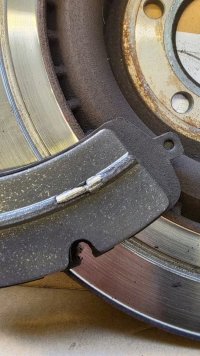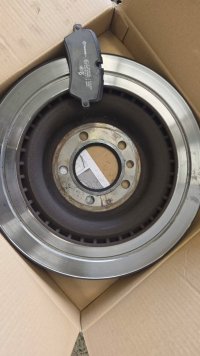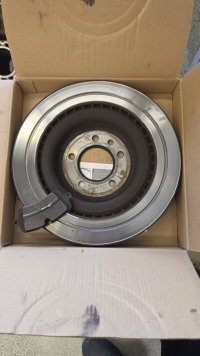
things that might make you go WOW!!!!! thread

Bucket on wheels

Bucket on wheels

Well-known member
Bucket on wheels

Bucket on wheels

Well-known member
V8Druid

V8Druid

do it as well as you can,but learn to do it better
no question .... they were clever buggers back then
would guess this is running at maybe 1% of its proper speed
 
Last edited:
V8Druid

V8Druid

do it as well as you can,but learn to do it better
no question .... they were clever buggers back then
would guess this is running at maybe 1% of its proper speed
 
V8Druid

V8Druid

do it as well as you can,but learn to do it better
" Descending toward her test depth of 1,300 feet, the world's most advanced nuclear submarine sent a garbled transmission before vanishing into the abyss.
On the morning of April 10, 1963, 220 miles east of Cape Cod, the lead ship of her class, USS Thresher (SSN-593), was conducting deep-dive trial runs following a major shipyard overhaul. In radio contact with the surface vessel USS Skylark, the submarine halted every hundred feet to check hull integrity, valves, and high-pressure piping. At 9:12 a.m., Skylark received a distorted message reporting minor difficulties, followed by the cryptic number 900, a figure analysts later realized meant Thresher had plunged 900 feet past her maximum test depth. Underwater acoustic arrays recorded the final, horrific collapse of her pressure hull at a depth of 2,200 feet, an implosion that occurred in one-tenth of a second and scattered her debris across a mile of ocean floor 8,400 feet down.

All 129 men aboard, 112 naval personnel and 17 civilian technicians, perished instantly in the worst submarine disaster in American history. In direct response to the catastrophic loss, the United States Navy created the SUBSAFE quality assurance program, implementing stringent engineering standards that strictly control every valve, pipe, and weld beneath a submarine's waterline. While the Navy lost sixteen submarines to accidents in the five decades before Thresher, not a single SUBSAFE-certified submarine has been lost in the decades since. Today, her scattered hull rests in total darkness off the Atlantic coast, serving as an irreplaceable benchmark for naval safety, structural mechanics, and deep-sea disaster investigation. Standing as a silent monument to those 129 men, Thresher's tragedy leaves us to reflect on how a heartbreaking loss forever transformed undersea exploration and saved countless lives that followed. " :oops::oops::(
 
pettsy

pettsy

Well-known member
Saw this on FB last night 😮

IMG_2238.jpegIMG_2239.jpegIMG_2240.jpeg
 
V8Druid

V8Druid

do it as well as you can,but learn to do it better
been pushing their luck for some time BTLs .... no way would you have gotten me down in there :oops::oops:

1792080026371.png
 
Bri963

Bri963

Well-known member
" Descending toward her test depth of 1,300 feet, the world's most advanced nuclear submarine sent a garbled transmission before vanishing into the abyss.
On the morning of April 10, 1963, 220 miles east of Cape Cod, the lead ship of her class, USS Thresher (SSN-593), was conducting deep-dive trial runs following a major shipyard overhaul. In radio contact with the surface vessel USS Skylark, the submarine halted every hundred feet to check hull integrity, valves, and high-pressure piping. At 9:12 a.m., Skylark received a distorted message reporting minor difficulties, followed by the cryptic number 900, a figure analysts later realized meant Thresher had plunged 900 feet past her maximum test depth. Underwater acoustic arrays recorded the final, horrific collapse of her pressure hull at a depth of 2,200 feet, an implosion that occurred in one-tenth of a second and scattered her debris across a mile of ocean floor 8,400 feet down.

All 129 men aboard, 112 naval personnel and 17 civilian technicians, perished instantly in the worst submarine disaster in American history. In direct response to the catastrophic loss, the United States Navy created the SUBSAFE quality assurance program, implementing stringent engineering standards that strictly control every valve, pipe, and weld beneath a submarine's waterline. While the Navy lost sixteen submarines to accidents in the five decades before Thresher, not a single SUBSAFE-certified submarine has been lost in the decades since. Today, her scattered hull rests in total darkness off the Atlantic coast, serving as an irreplaceable benchmark for naval safety, structural mechanics, and deep-sea disaster investigation. Standing as a silent monument to those 129 men, Thresher's tragedy leaves us to reflect on how a heartbreaking loss forever transformed undersea exploration and saved countless lives that followed. " :oops::oops::(
Interesting they say every weld beneath a submarine’s waterline. Written by AI?
 
Bucket on wheels

Bucket on wheels

Well-known member
 
Top