

barracane
Well-known member
news historical origins chronological Komatsu machinery.
sorry if I ask the trivial question, there has been healthy competition between caterpillar and komatsu for some time, they are historic adversaries
on caterpillar there are detailed historical and chronological news I believe that the first caterpillar wheel loader was the 944 A I believe with a rigid frame and rear steering axle, D series bulldozers the net and wikipedia is full of every model and set-up with the exaltation of the characteristics and performance. Komatsu is known to have built the largest bulldozer as opposed to the legendary Caterpillar d 11 bulldozer, but I haven't found anything about the origins.
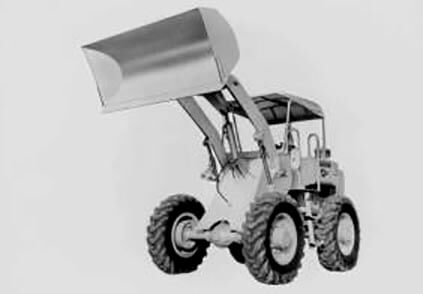
Komatsu JH30B Caricatore
(1965)
Komatsu JH65C Pala caricatrice
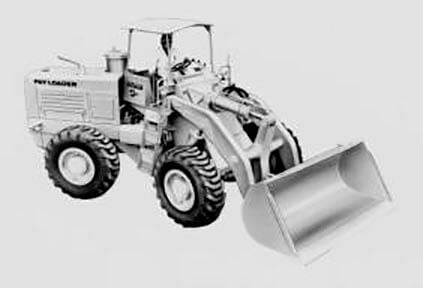
(1967)
Komatsu's first loader (at the time called the "Pay Loader") since the JH30B, a 1965 four-wheel drive wheel loader. It offered a bucket capacity of 1m³ and the combination of efficient digging capacity and affordable price made this model extremely popular. In Japan, sales grew rapidly, placing Komatsu at the forefront of the wheel loader market. In the years that followed, Komatsu launched other models with different payloads and capacities, such as the JH60, JH65C, JH90E, JH80B or the W90 (1976). With this last machine, the production of the JH and JH series wheel loaders was discontinued. 500. This started production of the W-series intended for export. The W90 was specially designed for tropical and desert areas. In 1981, Komatsu introduced the next series which is well known and the successor: WA series.
Komatsu wheel loader JH30B Loader
(1965)
The history of the wheel loader in Japan is quite short. SDA25 (2 wheel drive), the prototype put together by Nichiyu in 1949 was the beginning.
In 1965, Komatsu International, the merged company of Komatsu and International Harvester of the United States, began manufacturing 4-wheel drive wheel loaders under a technical partnership with Frank G Hough Co., a subsidiary of International Harvester. The name "Pay loader" was a Frank G Hough product name that Komatsu continued to use for sales. In those days it became synonymous with a wheel loader.
At that time, most 4WD wheel loaders in Japan had a bucket capacity of 4m3. Since Komatsu already made SD20 2WD loader with 1.0m3 capacity, they decided to change the H30B (bucket capacity 1.0m3) to JH30B for domestic production.
It offers the same digging capacity despite its lower price than the 1.4m3 class. JH30B sales increased rapidly. Its production and sales continued until it was updated as the jointly designed "510" with International Harvester in 1976. (The H30B had a rigid frame structure, while the 510 had articulated steering)
Komatsu wheel loader JH65C Loader
(1967)
This was the birth of the articulated steerable wheel loader. Because its front body can rotate 34 degrees sideways, it has been particularly useful in tight spaces and on soft surfaces. Its digging power was superior to other domestic models, which quickly led to dozer shovels being replaced for crushing stone and collecting river gravel.
Bucket capacity: 1.9 m3
Unlike today's wheel loaders, the driver's seat of these wheel loaders was located on the front frame. This means that the articulated steering knuckle was positioned behind the operator. International Harvester owned the patent and an operator facing in the same direction as the machinery was said to make work easier with better visibility. On the other hand, it had its issues such as the bump from the bucket to the driver's seat being strong and more sideways rocking of the driver's seat was evidenced when turning.
After all, Komatsu ended up not changing its design until it canceled its merger with International Harvester due to the business relationship, despite their design being a minority in the market.
Do you have other historical information on this prestigious brand regarding bulldozers, perhaps excavators, some significant anecdotes, some peculiarities. thank you.
sorry if I ask the trivial question, there has been healthy competition between caterpillar and komatsu for some time, they are historic adversaries
on caterpillar there are detailed historical and chronological news I believe that the first caterpillar wheel loader was the 944 A I believe with a rigid frame and rear steering axle, D series bulldozers the net and wikipedia is full of every model and set-up with the exaltation of the characteristics and performance. Komatsu is known to have built the largest bulldozer as opposed to the legendary Caterpillar d 11 bulldozer, but I haven't found anything about the origins.
Komatsu JH30B Caricatore
(1965)
Komatsu JH65C Pala caricatrice
(1967)
Komatsu's first loader (at the time called the "Pay Loader") since the JH30B, a 1965 four-wheel drive wheel loader. It offered a bucket capacity of 1m³ and the combination of efficient digging capacity and affordable price made this model extremely popular. In Japan, sales grew rapidly, placing Komatsu at the forefront of the wheel loader market. In the years that followed, Komatsu launched other models with different payloads and capacities, such as the JH60, JH65C, JH90E, JH80B or the W90 (1976). With this last machine, the production of the JH and JH series wheel loaders was discontinued. 500. This started production of the W-series intended for export. The W90 was specially designed for tropical and desert areas. In 1981, Komatsu introduced the next series which is well known and the successor: WA series.
Komatsu wheel loader JH30B Loader
(1965)
The history of the wheel loader in Japan is quite short. SDA25 (2 wheel drive), the prototype put together by Nichiyu in 1949 was the beginning.
In 1965, Komatsu International, the merged company of Komatsu and International Harvester of the United States, began manufacturing 4-wheel drive wheel loaders under a technical partnership with Frank G Hough Co., a subsidiary of International Harvester. The name "Pay loader" was a Frank G Hough product name that Komatsu continued to use for sales. In those days it became synonymous with a wheel loader.
At that time, most 4WD wheel loaders in Japan had a bucket capacity of 4m3. Since Komatsu already made SD20 2WD loader with 1.0m3 capacity, they decided to change the H30B (bucket capacity 1.0m3) to JH30B for domestic production.
It offers the same digging capacity despite its lower price than the 1.4m3 class. JH30B sales increased rapidly. Its production and sales continued until it was updated as the jointly designed "510" with International Harvester in 1976. (The H30B had a rigid frame structure, while the 510 had articulated steering)
Komatsu wheel loader JH65C Loader
(1967)
This was the birth of the articulated steerable wheel loader. Because its front body can rotate 34 degrees sideways, it has been particularly useful in tight spaces and on soft surfaces. Its digging power was superior to other domestic models, which quickly led to dozer shovels being replaced for crushing stone and collecting river gravel.
Bucket capacity: 1.9 m3
Unlike today's wheel loaders, the driver's seat of these wheel loaders was located on the front frame. This means that the articulated steering knuckle was positioned behind the operator. International Harvester owned the patent and an operator facing in the same direction as the machinery was said to make work easier with better visibility. On the other hand, it had its issues such as the bump from the bucket to the driver's seat being strong and more sideways rocking of the driver's seat was evidenced when turning.
After all, Komatsu ended up not changing its design until it canceled its merger with International Harvester due to the business relationship, despite their design being a minority in the market.
Do you have other historical information on this prestigious brand regarding bulldozers, perhaps excavators, some significant anecdotes, some peculiarities. thank you.