Hydraulic motors

doobin

doobin

Well-known member
Hi all,

Struggling to get a flail working on my machine at the moment. It's a Group 2 gear motor, mounted to an old pedestrian flail head I had. Ran fine on my Hyundai with the socket turned that sends it straight to tank. Bit slow, so I thought it should run perfect on the new Bobcat.

Blew the output shaft seal. Quick chat with Druid, obviously it wasn't set to free flow return. Had a look at the Bobcat spec- turns out there should be a switch and solenoid valve fitted, so they came and fitted it. It's still blowing the output seal. Also, the rocker switch will still load pressure up slightly on the 'non pressure' side- this didn't happen with my Hyundai. Is this correct? The switch shows a breaker- apparently breakers need a tiny bit of back pressure. Is this what this is for, despite being described as a direct to tank return? So there's a bit of back pressure and it's still blowing the seal?

There is a cross line relief fitted in the flail pipework.

I've also had a case drain line fitted, so may just fit a reversible motor with a case drain to let me cut both ways. Something perplexes me here. I've used all kinds of digger augers. All worked both ways, and none had a case drain line. What's the difference with the motors used in augers?
 
S

Smiffy

Well-known member
I don't know the mechanics but I would definitely recommend making it go in reverse if I've never had a reversable one it is definitely a massive advantage if attacking brambles
Single direction hedgecutters are a pain in thick going
 
V8Druid

V8Druid

do it as well as you can,but learn to do it better
but the flail hammers'd be going backwards guys and only have a sharp edge in one direction ??

Doob ... you're going to need more than a case drain line to deal with a direct to tank return off that motor .... pecker return on mine is an inch with a 3/4" feed ... return wants to be bigger than the feed and direct to return filter housing

also sounds like your so called direct to tank return is flowing through the valve .... so is not direct
 
doobin

doobin

Well-known member
Case drain is just that, to drain any internal leakage in the case, no? So would be the third line after flow and return.

Apparently the switch works a valve that dumps the return back before it goes through the valve block. But there still seems to be some back pressure.

Re flails, double sided ones, usually in pairs back to back are common. I have them on my machines.
 
V8Druid

V8Druid

do it as well as you can,but learn to do it better
Case drain is just that, to drain any internal leakage in the case, no? So would be the third line after flow and return.

Apparently the switch works a valve that dumps the return back before it goes through the valve block. But there still seems to be some back pressure.

Re flails, double sided ones, usually in pairs back to back are common. I have them on my machines.
that's a reversible unit then ;)
case drain is usually for a piston motor/pump ... geared motors; all the oil is in the case .... and a case drain line is only a very small line usually Doob, with next to zero back pressure to colect any oil lost from the pistons accumulating in the motor casing :rolleyes:

your back pressure could well be that the return from the valve is insufficient bore to cope with the volume and thus creates a small back pressure ..... or the port in the valve is too small to cope with the flow rate ..... a large(r than the flow/feed) bore pipe to your return filter case will cure your seal blowing issue
 
JD450A

JD450A

Feral as Fk 🐾
Personal Opinion reading into it is that the hyundai has a lower flow rate than the bobcat, and possibly ever so slightly lower pressure, I would also guess the return line is the same bore as the feed on the bobcat. The extra flow/pressure is too much for the motor to handle as useful power, and thus it's creating a restriction, thus the seal is the weakest link. We had similar with a Italian Made plate compactor/vibe piler with gear motor.

If the bobcat is fitted with valves on the hammer lines (e.g ball valves) I would have a try turning the feed line to half, so the restriction is not the motor itself.... obviously a chance you will blow the seals again but worth a try.
 
S

Smiffy

Well-known member
but the flail hammers'd be going backwards guys and only have a sharp edge in one direction ??

Doob ... you're going to need more than a case drain line to deal with a direct to tank return off that motor .... pecker return on mine is an inch with a 3/4" feed ... return wants to be bigger than the feed and direct to return filter housing

also sounds like your so called direct to tank return is flowing through the valve .... so is not direct

You can get double double sided hammers and depending which way you run it it will give you a more aggressive cut and a neater finishing cut but cant remember which ways which
But the bigger reason for a reversable flail is if you ever work with brambles or vine weed it can sometimes drag it in and wrap round the rotor and stall it
With a single direction motor you need to turn off get out cut it all out
Whereas reversible you move the head away from the cutting zone flick it into reverse and let it spit the whole lot out
 
doobin

doobin

Well-known member
I've asked for the technical spec on the 'direct to tank line'. If you crack both fittings whilst direct to tank is engaged, it leaks out obviously when you laod up the 'flow' side. But the 'return' side loads the engine ever so slightly when you press it, and does start to leak too after holding the rocker that way for a few secondes. So it sure doesn't seem to be 1 way, direct to tank.

I think I'll buy a reversible motor with a third (case drain) line. Having done some research it seems that a case drain line is always a good idea, even if the motor drains internal leakage to the return. This I'll fit direct to the flail shaft to cut out inefficiency. Currently it's running into the second output of the bevel drive (flail was originally on a 2 wheel tractor). So all I need to do now is work out flow rate and spec the motor. Any ideas how fast the flail shaft wants to be turning?
 
Last edited:
doobin

doobin

Well-known member
Personal Opinion reading into it is that the hyundai has a lower flow rate than the bobcat, and possibly ever so slightly lower pressure, I would also guess the return line is the same bore as the feed on the bobcat. The extra flow/pressure is too much for the motor to handle as useful power, and thus it's creating a restriction, thus the seal is the weakest link. We had similar with a Italian Made plate compactor/vibe piler with gear motor.

If the bobcat is fitted with valves on the hammer lines (e.g ball valves) I would have a try turning the feed line to half, so the restriction is not the motor itself.... obviously a chance you will blow the seals again but worth a try.
The Hyundai seems to be genuinely direct to tank- nothing whatsoever on the other side of the rocker when the valve is turned. Motor is well rated for the pressure. However, the weak point could indeeed be that it's flowing and returnign through DN06 couplings- I'll change to DN08 on the new reversible motor.
 
V8Druid

V8Druid

do it as well as you can,but learn to do it better
Personal Opinion reading into it is that the hyundai has a lower flow rate than the bobcat, and possibly ever so slightly lower pressure, I would also guess the return line is the same bore as the feed on the bobcat. The extra flow/pressure is too much for the motor to handle as useful power, and thus it's creating a restriction, thus the seal is the weakest link. We had similar with a Italian Made plate compactor/vibe piler with gear motor.

If the bobcat is fitted with valves on the hammer lines (e.g ball valves) I would have a try turning the feed line to half, so the restriction is not the motor itself.... obviously a chance you will blow the seals again but worth a try.

you're on the money with flow rate Rory .. the flail motors are all spec.ed with a specific flow rate ... they can only physically handle a specific flow at a given pressure which is also spec.ed ... my bomford is 80l/m at 160 bar ... my breaker circuit has a 600 quid pressure and flow adjustable valve fitted in its circuit, which bleeds the excess back into the system ... or rather bleeds out, what it requires from the main flow.
Giving the flail head 'everything' available is going to lead to issues - inevitably
 
V8Druid

V8Druid

do it as well as you can,but learn to do it better
I've asked for the technical spec on the 'direct to tank line'. If you crack both fittings whilst direct to tank is engaged, it leaks out obviously when you laod up the 'flow' side. But the 'return' side loads the engine ever so slightly when you press it, and does start to leak too after holding the rocker that way for a few secondes. So it sure doesn't seem to be 1 way, direct to tank.

I think I'll buy a reversible motor with a third (case drain) line. Having done some research it seems that a case drain line is always a good idea, even if the motor drains internal leakage to the return. This I'll fit direct to the flail shaft to cut out inefficiency. Currently it's running into the second output of the bevel drive (flail was originally on a 2 wheel tractor). So all I need to do now is work out flow rate and spec the motor. Any ideas how fast the flail shaft wants to be turning?

I did work mine out Doob and it's a hell of a rate ... can't recall exactly and'd have to look back, but it's in the thousands of RPM .. basically it's cc,s per rev. for the motor, divided into required flow ... from memory mine was 12cc/rev divided into 80l/m .... but can't remember exactly ... over 6,000rpm ... certainly runs on for a long time
 
V8Druid

V8Druid

do it as well as you can,but learn to do it better
The Hyundai seems to be genuinely direct to tank- nothing whatsoever on the other side of the rocker when the valve is turned. Motor is well rated for the pressure. However, the weak point could indeeed be that it's flowing and returnign through DN06 couplings- I'll change to DN08 on the new reversible motor.
did you say somewhere that this wasn't up to running the flail .... too slow ....therefore insufficient flow rate ... t'other machine's flow rate may be too high and therefore the seal can't cope, letting go ???
 
doobin

doobin

Well-known member
did you say somewhere that this wasn't up to running the flail .... too slow ....therefore insufficient flow rate ... t'other machine's flow rate may be too high and therefore the seal can't cope, letting go ???
Just checked spec with Flowfit- the Group 2 motors are rated for 64l/min, so should be fine.

Here's my plan.

1. Idle curiosity. Refit seal in motor and connect (off flail) to digger via DN08 couplings. See if it blows again.
2. Remove bevel box from flail and mount motor brackets in place.
3. Buy reversible motor next size down and fit.
4. Play around with gearing to get RPM required- just sprokets and chain, so easy enough to change.
 
V8Druid

V8Druid

do it as well as you can,but learn to do it better
Just checked spec with Flowfit- the Group 2 motors are rated for 64l/min, so should be fine.

Here's my plan.

1. Idle curiosity. Refit seal in motor and connect (off flail) to digger via DN08 couplings. See if it blows again.
2. Remove bevel box from flail and mount motor brackets in place.
3. Buy reversible motor next size down and fit.
4. Play around with gearing to get RPM required- just sprokets and chain, so easy enough to change.

but at what pressure doob??? ... as said the bomford's at 160 bar ... way down from my main pressure so has to be reduced. What flow rate is your machine putting out ?

the seal is gonna blow out if there is any pressure build up in the return line .. and if your flow/pressure is too great / above spec. --it'sagonnablow!!:oops:... it's the weak point in the motor's construction - the easy exit for excess oil

going down a size on the motor is likely to increase/exacerbate your issues and them chains an' sprockets're gonna be doing/going at, some 'lick':eek:

how about some pix of what you're about mate ;)
 
doobin

doobin

Well-known member
64l/min max flow, working pressure 190 bar. E27 auxillary relief is 180 bar. Sounds within spec?

The reversible motor has a case drain, and I have a dedicated case drain line fitted, so there should be no opportunity for pressure to build behind the seal?
 
M

Monkeybusiness

Well-known member
Femac forestal flail drum speed is supposed to be 2 - 2.5k rpm.
 

Attachments

  • 263BB9C1-F5AF-449A-9638-CD4EE93E6149.jpeg
    263BB9C1-F5AF-449A-9638-CD4EE93E6149.jpeg
    276.7 KB · Views: 265
doobin

doobin

Well-known member
Femac forestal flail drum speed is supposed to be 2 - 2.5k rpm.
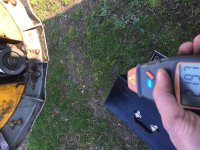
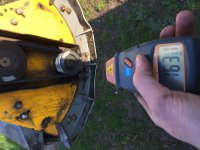
Thanks for that. I've got the same laser tacho!

Think I might change to belt drive for easy of messing about getting it right. Is yours geared up or geared down on the pulleys?
 
M

Monkeybusiness

Well-known member
Up. This was the demo machine - I’m still waiting for Approved Hydraulics to give me mine (it’s been paid for in full and they told me it was en route a month ago)... f****ng muppets.
 

Attachments

  • 39C68921-82E6-4EE4-9B95-239F7BD8956F.jpeg
    39C68921-82E6-4EE4-9B95-239F7BD8956F.jpeg
    149.3 KB · Views: 259
Last edited:
doobin

doobin

Well-known member
Do you suppose it matters whether it's geared up or down? Still the same load on the motor?

I'm assuming the following:

1. If I get an 11cc gear motor working at 85% efficiency, this gives 3090-3863RPM at 40-50 LPM. My E27 is rated for 50LPM, but that's most likely not real world?
2. This reduces via current gearing of (27/18 = 1.5) to between 2060-2575 RPM on the flail shaft.

Next size motor down is a huge drop at 8CC, so might have to change gearing to get it bob on. What do we reckon?
 
doobin

doobin

Well-known member
Bollocks, the 11cc is only rated to 34LPM. Will have to change gearing.

I'll go to belts- cheaper and easier to find taperlock pulleys off the shelf, wherease sprockets I'd need to bore out and broach a keyway. Belts should also be more forgiving and run sweeter.

This site is proper useful: https://www.stevegs.com/utils/beltcalc.htm
 
Top